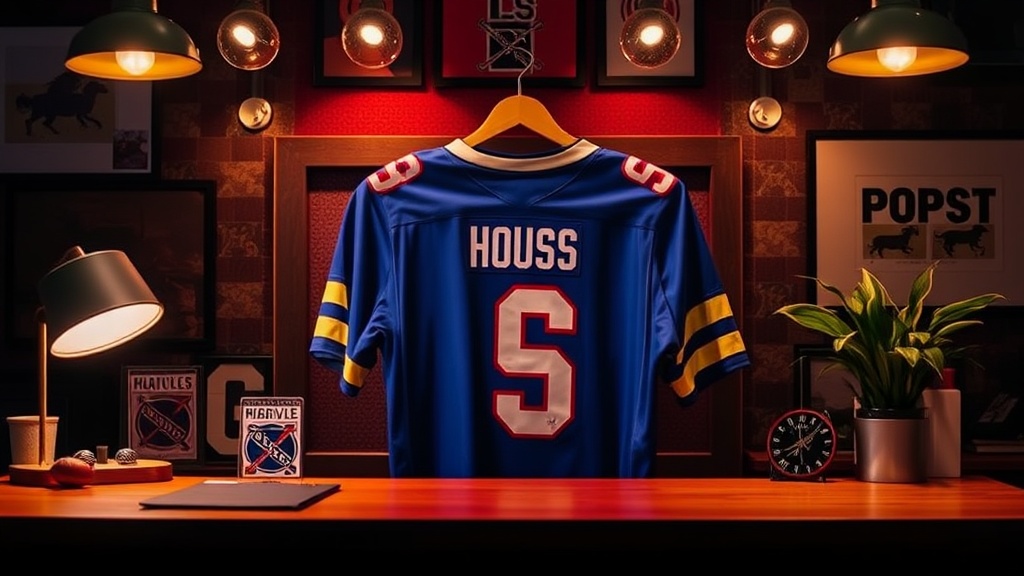
Selecting the Right Lighting for Your Signed Jersey Collection

Imagine you've just secured a rare, hand-signed Michael Jordan Bulls jersey. You spend hours finding the perfect frame, but then you hang it in a room with a single, bright overhead light or near a window. Within a few years, the vibrant red of the jersey starts to fade, and the ink of the signature begins to crack or vanish. Lighting isn't just about making a collection look good for a photo; it's about preservation. This guide breaks down how to choose light sources that highlight your items without destroying their value.
What Type of Light Destroys Signed Jerseys Fastest?
Ultraviolet (UV) radiation from sunlight and certain types of fluorescent bulbs causes the most rapid degradation of fabric dyes and ink signatures. High UV exposure breaks down the molecular bonds in the polyester or cotton fibers of your jersey. This leads to discoloration—often called "sun bleaching"—and can make the ink of a signature become illegible over time.
The most dangerous light source is direct sunlight. Even if your jersey is behind glass, standard glass does almost nothing to stop UV rays. If you're displaying a high-value item, you shouldn't just use any frame; you need to look for UV-protective glass or acrylic. This is a standard practice for museum-grade displays. If you haven't already thought about the physical housing of your items, you might want to check out my guide on how to frame a signed jersey to ensure your protection starts with the right materials.
Aside from the sun, older fluorescent tubes are also a problem. They emit small amounts of UV light that can slowly eat away at the colors of a jersey. While modern LED technology has largely fixed this, many people still use old fixtures in home offices or basements. It's a mistake you don't want to make with a collection you've spent years building.
Common Light Sources and Their Risks
| Light Type | Risk Level | Impact on Collection |
|---|---|---|
| Direct Sunlight | Extreme | Rapid fading and fiber breakdown. |
| Standard Fluorescent | Medium | Slow discoloration over several years. |
| Standard LED | Low | Minimal heat and UV output. |
| Halogen | High | Significant heat buildup near the frame. |
How Do I Choose the Best Lighting for Display?
The best lighting for your collection uses high-quality LEDs that emit zero UV radiation and generate minimal heat. LEDs are the gold standard because they stay cool and allow you to control the color temperature. You want a light that makes the colors pop without making the jersey look washed out or overly yellow.
When selecting LEDs, pay attention to the "Kelvin" rating. This tells you how warm or cool the light looks. For a sports-themed room, you might want a slightly cooler light to emphasize the crispness of the jersey colors. For a more traditional, "study" vibe, a warmer light works better.
Here are the three main ways to light a display:
- Internal LED Strips: These are great for shadow boxes. They provide even light across the entire surface of the jersey. Just make sure they aren't touching the fabric directly to avoid heat buildup.
- Spotlighting: This uses a single beam to draw attention to a specific item. It's great for a centerpiece, but if the beam is too intense, it can create "hot spots" of light that fade the jersey unevenly.
- Ambient Room Lighting: This is the general light in your room. If you use this, ensure your room has blackout curtains or UV-filtering window film to protect the collection from the sun.
A quick tip: if you're using internal lights, check the manufacturer's specs for heat output. Even though LEDs are much cooler than old bulbs, a tiny bit of heat can still affect the adhesive used in some modern jersey patches or the ink of a signature if it's trapped in a sealed case.
Does Light Color Temperature Affect the Look of a Jersey?
Yes, color temperature significantly changes how the colors of the jersey and the ink appear to the human eye. A light with a low Kelvin rating (around 2700K) will look warm and yellowish, which can make a white jersey look "off-white" or aged. A high Kelvin rating (5000K+) will look bluish and crisp, which can make colors look very vivid but sometimes feels a bit clinical or "cold."
If you're displaying a vintage jersey, like a 1970s era baseball jersey, a slightly warmer light might complement the "aged" aesthetic. However, if you're showing off a modern, bright neon-colored jersey, you'll want a higher color temperature to show off that vibrancy. It’s a balance of aesthetics versus preservation. (I've spent way too much time testing different bulbs in my own display cases to realize how much this matters.)The goal is to find a "neutral" light. Look for bulbs with a high Color Rendering Index (CRI). A CRI of 90 or higher is ideal. This ensures that the colors you see under the light are the true colors of the jersey. If the CRI is low, your blue jersey might look a bit more purple under certain lights. It’s a subtle difference, but collectors notice it.
When you're setting up your display, don't just turn the lights on and walk away. Step back. Look at the jersey from different angles. Is the light creating a glare on the glass? Is it casting a shadow over the signature? These small adjustments make a huge difference in how professional your collection looks.
How Much Light Exposure is Safe for a Display Case?
Safe light exposure is measured by "lux," which is the intensity of light hitting a surface. For highly sensitive items like signed jerseys, you should aim for a low-light environment. Most collectors keep their displays in rooms where the light is controlled and indirect. You shouldn't be aiming for a brightly lit room; you want a controlled environment that highlights the item without overexposing it.
If you're worried about the environment in your home, you can use a light meter app on your phone to get a rough idea of the lux levels in your display area. It’s not a professional tool, but it gives you a starting point. If you find that your display is getting way too much light, you might need to rethink the placement of your display case. Perhaps it shouldn't be on the same wall as a window, or maybe it needs a more substantial-looking frame with deeper-set glass.
It's worth noting that even if you use the best lights, the environment still matters. If you live in a place with high humidity, the light can actually exacerbate certain issues if it's generating even a small amount of heat. This is why I often talk about storing signed jerseys in high humidity environments. Heat and light together are a bad combination for any collectible.
A good rule of thumb: if the light feels hot to the touch after being on for ten minutes, it's too much light for your jersey. Move the light source further away or switch to a lower-wattage LED. Your collection deserves to last a lifetime, not just a few seasons.