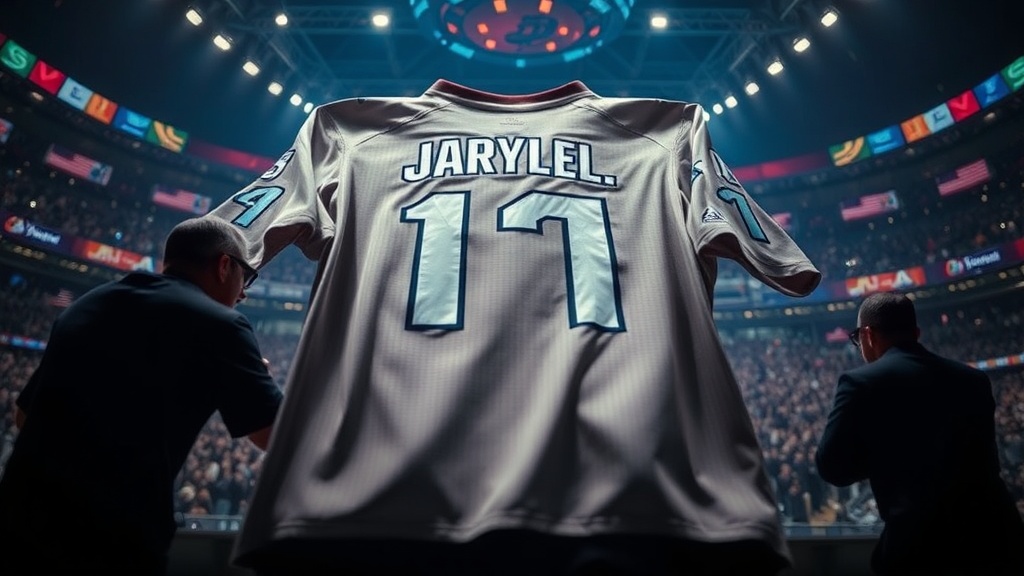
Why Do Limited-Edition Signed Jersey Drops Create Collector Frenzy?

What's Really Happening When 500 People Rush a 50-Jersey Release?
The 2022 Michael Jordan "Last Dance" commemorative jersey—signed by Jordan, Pippen, and Rodman—sold out in 47 seconds. Not 47 minutes. Forty-seven seconds for a $3,800 piece of apparel that most buyers never intended to wear. This wasn't a fluke. Limited-edition signed memorabilia drops have become the flashpoints of modern collecting, and the psychology behind them reveals something fascinating about what we actually value.
We're not just buying fabric with ink on it. We're buying membership into an exclusive club—one with a velvet rope and a very strict bouncer. Understanding why these drops trigger such intense reactions helps collectors make smarter decisions (and avoid the regret that comes from impulse purchases at 3 AM). This post examines the mechanics of scarcity-driven collecting, the emotional rollercoaster of drop culture, and how to participate without losing your mind—or your savings.
How Did Scarcity Become the Main Currency in Signed Memorabilia?
Human beings are weird about rarity. Give us unlimited access to something and we yawn. Tell us only 100 exist and we'll camp outside a store—or more likely, frantically refresh a website at 9:59 AM. This isn't coincidence; it's hardwired psychology. The scarcity principle—documented extensively in behavioral economics—demonstrates that we perceive limited items as more valuable regardless of their actual utility.
Signed jersey manufacturers (and the athletes who partner with them) have become remarkably sophisticated about exploiting this tendency. It's not just about making fewer items—it's about creating theater around the limitation. The numbered certificate of authenticity isn't just proof; it's a trophy. "You have #7 of 50." That sentence carries weight that "You have a signed jersey" simply doesn't.
Consider the mathematics of modern drops. A typical limited release might include 25 to 500 units globally. When thousands of collectors are competing for access, the odds resemble lottery tickets more than retail purchases. This manufactured scarcity transforms shopping into sport—and sport into obsession. The sports memorabilia market has grown into a $26 billion industry largely on the back of these controlled-release strategies.
What's particularly interesting is how secondary markets reinforce the primary frenzy. When a $500 signed jersey resells for $2,000 within hours, it validates the entire ecosystem. The winners feel brilliant. The losers feel determined to win next time. And the manufacturers watch their brand value compound with each successful drop.
Why Does FOMO Hit So Much Harder in Collector Communities?
Fear of missing out isn't new, but collector communities amplify it through social proof in ways that would make early advertisers weep with envy. When you see fellow collectors posting their acquisition on Instagram within minutes of a drop, the psychological impact is immediate and visceral. You're not just missing a product—you're missing a shared experience, a story, a badge of belonging.
The community aspect of signed jersey collecting creates a fascinating paradox. We're drawn together by shared passion, yet we're competing against each other for access to limited resources. Discord servers and Reddit communities that form around collecting often devolve into tense pre-drop strategy sessions and post-drop result threads that read like battlefield reports. "Got cart-jacked at checkout." "Site crashed." "Who scored?"
This social dynamic serves manufacturers perfectly. Every post celebrating a successful purchase is free marketing that simultaneously promotes the product and reinforces scarcity. Every disappointed comment keeps the conversation—and desire—alive. The viral mechanics of modern consumer psychology ensure that failed attempts often generate more buzz than successful ones.
There's also the membership aspect to consider. Owning a limited drop signals something about you to other collectors. It says you were fast enough, connected enough, committed enough. In a hobby where authenticity and dedication matter, these signals carry social capital that transcends the monetary value of the item itself.
What Role Do Resale Markets Play in Collector Psychology?
The resale market for signed jerseys operates as both validation engine and pressure cooker. Platforms like StockX and specialized memorabilia auction sites have created unprecedented price transparency. Within minutes of a drop selling out, market prices emerge. Sometimes they're double the retail. Sometimes they're lower (the dreaded "brick"). Either way, the existence of a liquid secondary market fundamentally changes how collectors approach limited releases.
For some, resale potential justifies the risk of participation. "If I don't love it, I'll sell it" becomes a rationalization that permits impulse purchases. This mindset—common in sneaker culture and increasingly prevalent in signed memorabilia—blurs the line between collecting and speculating. The item becomes a financial instrument first, a beloved possession second (if ever).
But resale markets also create pressure that extends beyond individual purchases. When limited jerseys consistently appreciate, the baseline expectation shifts. Collectors feel pressure to participate in every drop because "what if this is the one that 10x's?" The possibility of missing the next valuable release becomes its own source of anxiety—one that drives behavior regardless of genuine interest in the specific item.
What's often overlooked is how resale markets affect the primary market's integrity. When manufacturers see their products selling for multiples on secondary markets, they're incentivized to raise prices, further limit quantities, or create increasingly artificial scarcity. The feedback loop between primary and secondary markets can distort collecting into something that resembles gambling more than passion.
How Can Collectors Engage with Drop Culture Without Burning Out?
The adrenaline of a successful cop is real. So is the disappointment of an L (loss, in collector parlance). When drops become a regular part of your collecting life, the emotional toll adds up. The highs are brief. The lows linger. And the time investment—researching releases, preparing payment methods, monitoring restocks—can consume hours that might otherwise go toward actually enjoying your collection.
Setting boundaries around participation isn't weakness; it's sustainability. Serious collectors often develop personal criteria for which drops merit their attention. Maybe it's only items from specific athletes, teams, or eras. Maybe it's only pieces below a certain price point. These filters help maintain focus in an environment designed to trigger FOMO at every turn.
It's also worth questioning the scarcity narrative itself. Is that jersey truly limited because only 100 were made—or because the manufacturer chose to make only 100? Scarcity is often artificial, and remembering this can provide helpful emotional distance. The manufactured nature of limited releases doesn't make them less real as collectibles, but it does recalibrate their significance. You're not acquiring a piece of history that fate nearly denied you—you're winning a retail lottery designed to create exactly these feelings.
Community building offers another path toward healthy engagement. The collectors who seem happiest with their hobby long-term are often those who've found value in the social connections rather than the acquisitions. Discussing strategy, sharing authentication knowledge, or simply appreciating each other's collections can provide satisfaction that competes with the dopamine hit of a successful purchase.
There's also the question of authenticity in a broader sense. As limited drops become more common, some collectors are gravitating toward bespoke or commissioned pieces—items obtained through personal connections or created specifically for them. These acquisitions carry different stories and often different emotional weight than mass-produced limited editions. They represent a kind of collecting that drop culture can't easily replicate.
Are Limited Drops Actually Worth the Hype?
Three years after that 47-second Jordan jersey sellout, resale prices have stabilized around $5,200—a solid return, certainly, but hardly the generational wealth some buyers imagined. Meanwhile, jerseys from equally limited drops featuring less iconic athletes have depreciated significantly as initial hype faded. The data tells a complicated story about whether scarcity alone creates lasting value.
What endures—what actually matters to collectors five, ten, twenty years later—isn't the limitation number. It's the story. The connection to a meaningful moment in sports history. The personal significance of that particular athlete or team. The memory of how the piece was acquired. Limited drops can be part of that story, but they're not the whole story. A mass-produced signed jersey obtained through a meaningful personal interaction often carries more weight than #3 of 25 purchased through a frantic website refresh.
The healthiest relationship with limited drops treats them as one avenue among many—not the primary path to collecting satisfaction. The frenzy is real. The community is genuine. The items can be beautiful. But the collecting life that sustains itself over decades usually finds value beyond the manufactured urgency of the next drop. It finds meaning in curation, in knowledge, in relationships, and in the quiet satisfaction of building something personal—whether that something is large or small, limited or abundant.