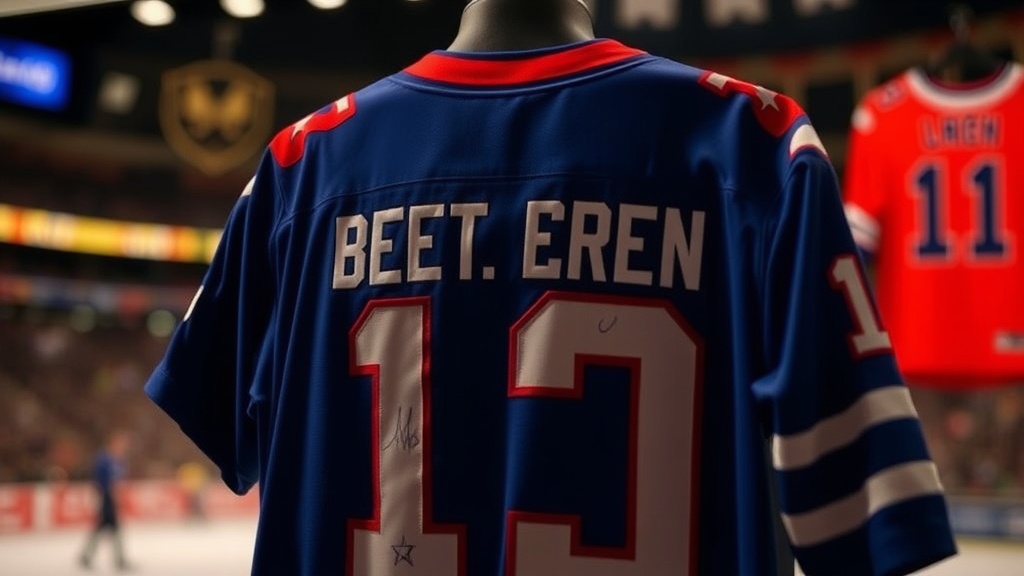
The Complete Guide to Buying Authentic Signed Jerseys

This guide covers everything you need to spot authentic signed jerseys, avoid counterfeits, and make smart purchases that actually hold value. Counterfeit memorabilia floods the market—spending thousands on a fake isn't just disappointing, it's completely avoidable with the right knowledge. Whether you're starting a collection or hunting for that one centerpiece jersey, these strategies protect your wallet and your passion for the game.
How do you know if a signed jersey is authentic?
Authentic signed jerseys come with documentation from reputable third-party authenticators, consistent signature characteristics, and provenance that traces back to the signing event. The signature itself tells a story—pressure points, ink flow, and letter formation should match known examples from that athlete.
Here's the thing: even experienced collectors get fooled. Forgeries have become sophisticated—some counterfeiters use autopens (mechanical devices that replicate signatures) or trace over printed signatures. The real protection isn't your eye—it's the paperwork.
Always look for a Certificate of Authenticity (COA) or a Letter of Authenticity (LOA) from recognized companies. These documents include:
- The authenticator's name and contact information
- A detailed description of the item
- The date and location of the signing (when known)
- A unique certification number you can verify online
Worth noting: COAs from "mystery" companies you've never heard of are worthless. If the certificate comes from "Elite Sports Memorabilia Authenticators of Topeka"—that's a red flag. Stick to the big three: PSA/DNA, JSA (James Spence Authentication), and Beckett Authentication Services.
The jersey itself matters too. A signed replica jersey (the $100 fan versions sold at Dick's Sporting Goods) holds less value than an authentic on-field version. The tags should be intact, the stitching clean, and the manufacturer (Nike, Fanatics, Adidas) should match what players actually wore during that season.
What is the best authentication company for sports memorabilia?
PSA/DNA, JSA, and Beckett Authentication Services dominate the industry, with PSA/DNA holding the largest market share for sports autographs. Each has strengths depending on your specific needs—and the choice matters for resale value.
| Company | Best For | Typical Cost | Turnaround Time |
|---|---|---|---|
| PSA/DNA | High-value items, vintage autographs | $25-$100+ per item | 10-20 business days |
| JSA | Modern athletes, quick verification | $20-$75 per item | 5-15 business days |
| Beckett | Card and jersey combos, slabbed items | $25-$85 per item | 10-20 business days |
The catch? Authentication isn't cheap—especially for a $150 jersey. That said, an unauthenticated Michael Jordan signed jersey might sell for $800. The same jersey with PSA/DNA certification? $3,000+. The authentication pays for itself.
Some collectors prefer witnessed signings—events where authenticators physically watch the athlete sign. Companies like Steiner Sports and Fanatics Authentic specialize in these controlled environments. You pay a premium, but the chain of custody is bulletproof.
How much should you pay for an autographed jersey?
Expect to pay anywhere from $150 for a signed jersey from a role player to $5,000+ for Hall of Famers and rare inscriptions—with authentication adding $20-$50 to your total investment. The price depends on four factors: the player's status, the jersey quality, the signature placement, and whether it includes special inscriptions.
A basic Patrick Mahomes signed Kansas City Chiefs replica jersey runs $400-$600. Upgrade to an authentic Nike Vapor Untouchable on-field version? You're looking at $1,200-$1,800. Add "SB LIV MVP" inscription? Now we're talking $2,500+.
Here's where collectors get tripped up. That "too good to be true" Tom Brady signed Patriots jersey for $199 on eBay? It's fake. Guaranteed. Brady's signature starts around $800 for authenticated items—and that's for basic replicas. The math doesn't lie.
Budget allocation matters. Serious collectors follow the 70/30 rule: 70% of your budget goes to the autograph and authentication, 30% to the jersey itself. A pristine signature on a worn replica beats a questionable signature on an authentic game jersey every time.
Where should you buy signed jerseys?
Stick to established dealers with strong reputations, official team stores, reputable auction houses, and certified online platforms that guarantee authenticity and offer return policies. The source matters as much as the item itself.
Top tier options include:
- Fanatics Authentic — Direct partnerships with leagues and players. Higher prices, zero risk.
- Steiner Sports — Known for exclusive athlete relationships and witnessed signings.
- Heritage Auctions and Goldin — For high-end vintage pieces with full provenance.
- Certified eBay sellers — Look for PowerSellers with 99%+ positive feedback and thousands of transactions.
That said, avoid Facebook Marketplace and Craigslist for signed memorabilia. The anonymity makes scams trivial. Card shows can work—but bring a loupe, study exemplars beforehand, and never buy from the "guy with a folding table in the parking lot."
What are the biggest red flags when buying?
Missing documentation, prices significantly below market value, pressure tactics ("someone else is coming to look at it"), and sellers who refuse detailed photos are all reasons to walk away immediately. Trust your gut—if something feels off, it probably is.
Other warning signs:
- COAs from companies with no physical address or website
- Signatures that look "too perfect"—real autographs have variation
- Jerseys signed in unnatural locations (who signs the sleeve number?)
- Photos of the signing that look Photoshopped or staged
- Sellers who won't provide the certification number for online verification
Worth noting: The "sticker shock" of authentication is real. But unauthenticated jerseys are essentially worthless for resale. That $300 "steal" without a COA becomes a $50 garage sale item when you try to sell it.
How do you display and protect your investment?
UV-protective display cases, climate-controlled environments, and proper framing materials prevent fading and deterioration that destroy value faster than counterfeit signatures. Signed jerseys aren't meant to be worn—that's what replicas are for.
Framing options range from $150 DIY kits at Michael's to $800 custom museum-quality displays from local framers. The key is UV-protective glass or acrylic—sunlight fades signatures in months, not years. Acid-free backing prevents yellowing.
Storage matters too. Never fold a signed jersey (creases stress the fabric and signature). Never store in basements or attics (humidity and temperature swings cause mold and ink bleeding). The ideal spot? A closet in your living space—consistent temperature, low humidity, away from windows.
The thrill of owning a piece of sports history is unmatched. A signed Mike Trout Angels jersey isn't just fabric and ink—it's a moment captured, a connection to greatness. Buy smart, authenticate everything, and build a collection that brings genuine pride for decades.