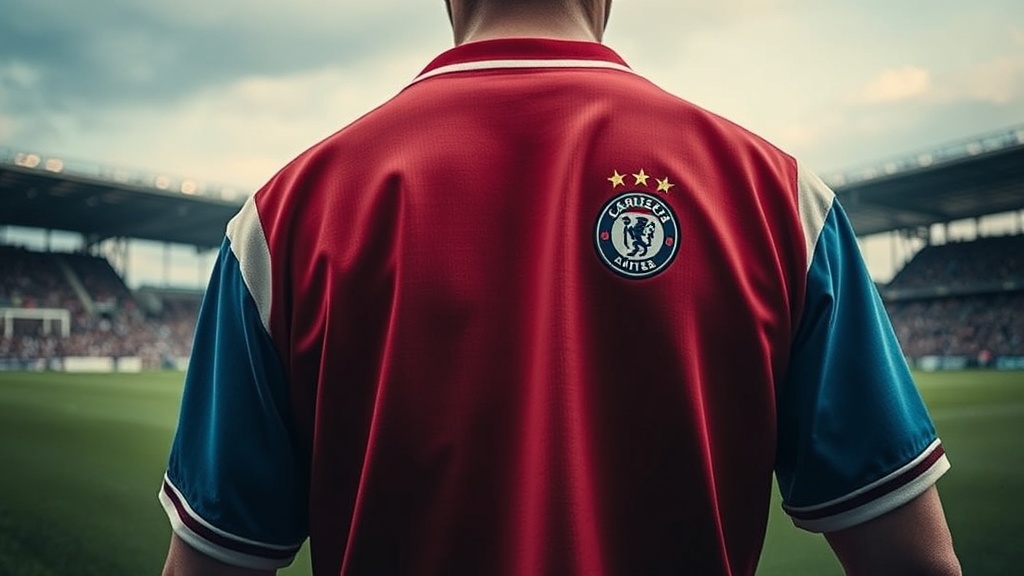
Rare Vintage Kits That Changed Football History

The 1970 Brazil Yellow Icon
The 1990 Germany Retro Aesthetic
The 1998 France Home Kit Revolution
A heavy cotton jersey, a slightly crooked collar, and a smell of old stadium grass—this is what collectors chase. Football kits aren't just sportswear; they are physical artifacts of cultural shifts. This list examines the specific vintage jerseys that moved the needle for both the sport and the burgeoning football fashion market. We're looking at the pieces that transitioned from the pitch to the high-end collector's market.
The value of a vintage kit isn't just about the player who wore it. It's about the design, the era, and the cultural weight the garment carries. If you're a serious collector, you know that a plain shirt is worth a fraction of one with a specific, iconic sponsor or a unique texture. We're diving into the kits that defined eras.
Why Are Vintage Football Kits So Valuable?
Vintage football kits derive their value from a combination of scarcity, historical significance, and the "Blokecore" fashion movement. When a kit becomes a fashion statement, its price on the secondary market skyrockets. It isn't just about a piece of polyester anymore; it's about owning a slice of history. Collectors often look for specific years where a manufacturer like Adidas or Umbro released a design that broke the mold.
The rise of streetwear has pushed this even further. You'll see people wearing 1990s retro kits at high-fashion events or even on runways. This crossover between sports memorabilia and high fashion is what drives the price of a 1994 Brazil kit way past its original retail value. (And yes, the demand for "deadstock" or unworn vintage items is at an all-time high right now.)
To understand the market, you have to look at the brands that dominated specific eras. For instance, the Adidas brand has a massive influence on the resale value of 80s and 90s jerseys due to their iconic three-stripe branding. If the kit has a unique texture or a bold, polarizing colorway, the value jumps. It’s that simple.
The Icons of the 90s Era
The 1990s were the "golden era" for jersey design. This was a time when sponsors weren't afraid to be loud and patterns were anything but subtle. Think of the bright, neon colors and the heavy, oversized fits that defined the decade.
- 1990 West Germany Home Kit: The subtle geometric pattern and the classic collar make this a holy grail for many. It represents a specific era of German dominance and is highly sought after in the collector community.
- 1994 Brazil Home Kit: This is the kit that defines the "Joga Bonito" era. The bright yellow with the green trim is instantly recognizable and carries immense prestige.
- 1996 Manchester United Home Kit: The Umbro era of United jerseys is legendary. The sharp, clean lines of the 90s-era shirts are a staple for anyone building a serious collection.
What Makes a Kit a "Holy Grail" for Collectors?
A "holy grail" kit is a garment that possesses a perfect storm of rarity, iconic player association, and a design-forward aesthetic. It’s the shirt you see in a museum or a high-end auction, not just a thrift store. Usually, these kits are defined by a specific moment in time—a World Cup win, a legendary goal, or a radical change in branding.
The "holy grail" status often depends on the manufacturer. An original 1970s kit by Nike or a classic Adidas piece from the early-to-mid 90s will always command more attention. It’s the "if you know, you know" factor. A collector doesn't just want a shirt; they want the *exact* shirt worn during a specific championship run.
Here is a breakdown of the elements that drive that "holy grail" status:
| Feature | Impact on Value | Reasoning |
|---|---|---|
| Player Association | High | A jersey worn by Pelé or Maradona is worth significantly more than a standard version. |
| Sponsor Logo | Medium | Certain sponsors (like Sharp or Pirelli) are iconic to their respective eras. |
| Manufacturer | High | Classic brands like Umbro or vintage Adidas have higher prestige in the collector community. |
| Condition | Extreme | A "deadstock" (unworn) shirt is the ultimate prize. |
The Importance of the "Sponsor Era"
Don't underestimate the power of the sponsor. In the modern era, sponsors are often subtle or digitally integrated. In the 90s, they were part of the design. A kit with a bold, high-contrast sponsor can be more collectible than the shirt itself. It’s a piece of graphic design history.
How Much Does a Vintage Football Kit Cost?
The cost of a vintage football kit varies wildly based on the year, the player, and the condition of the item. You might find a common 2000s-era jersey for $40, but a 1970s classic could fetch thousands at auction. There isn't a fixed price—it's a living market driven by hype and scarcity.
If you're looking at the entry-level, you can find decent "Blokecore" pieces on secondary markets for under $100. But if you're looking for the stuff that actually matters—the stuff that changes a collection—you're looking at a different tier of investment. The price is often dictated by the "story" of the shirt.
Typical Price Brackets:
- Common Vintage (2000s-2010s): $30 – $80. These are easy to find and often used for casual fashion.
- Mid-Tier Icons (90s Era): $150 – $400. This is where the real design-heavy jerseys live.
- High-End Grails (Pre-1990s/Match Worn): $1,000+. These are the pieces that collectors fight over in private groups.
It's worth noting that "match-worn" vs. "match-issue" is a huge distinction. A match-worn shirt (actually worn by the player on the pitch) is a different beast entirely compared to a match-issue shirt (the one players wear in training or warm-ups). The former is a museum piece; the latter is a high-end collectible.
The market is currently seeing a massive influx of interest from the fashion world. This means prices aren't just staying steady—they're climbing. If you see a vintage kit with a unique, slightly "ugly" pattern, buy it. Those are often the ones that become the next big trend in streetwear.
The truth is, collecting these kits is about more than just the fabric. It's about the history of the game and the way fashion and sport have become inseparable. Whether it's a heavy cotton shirt from the 70s or a neon polyester number from the 90s, these pieces are the physical evidence of football's evolution. Keep an eye on the brands and the eras that defined the game—that's where the real value lies.