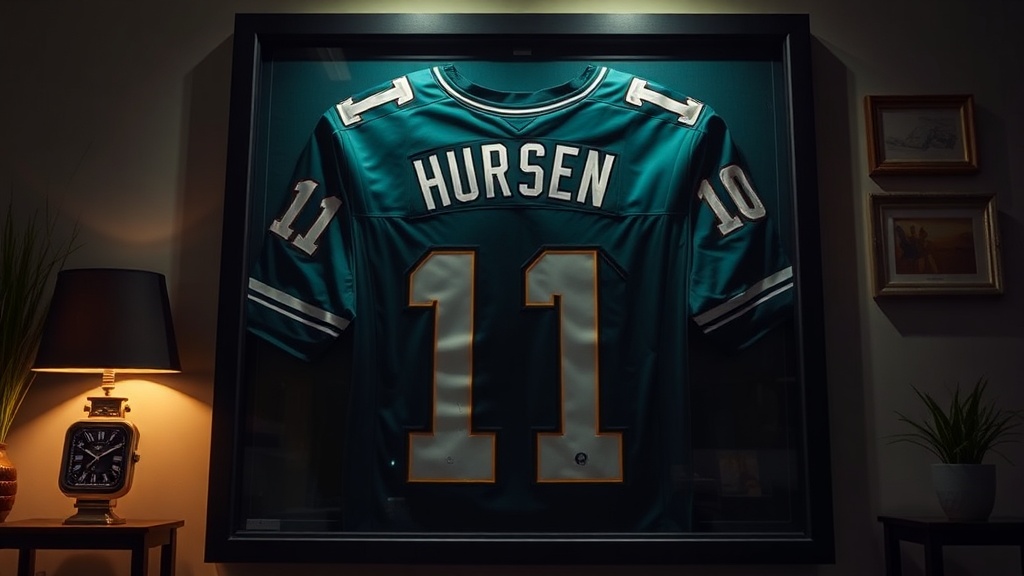
How to Properly Frame and Display Your Signed Jerseys at Home

This guide covers everything needed to frame and display signed jerseys at home—from selecting the right materials to proper wall mounting techniques. Whether the collection includes a single signed Messi jersey or a full wall of NBA legends, proper framing protects the investment (some autographed pieces appreciate thousands of dollars annually) while creating a striking visual centerpiece for any room. The techniques here work for football, basketball, baseball, and hockey jerseys, with specific tips for preventing fading, moisture damage, and signature degradation over time.
What's the Best Way to Frame a Signed Jersey Without Damaging It?
The safest method uses a shadow box with acid-free mounting materials and UV-protective acrylic or glass—never pin, staple, or apply adhesive directly to the fabric. The jersey should "float" inside the frame, supported by a form-fitting insert that maintains the natural shape without creating stress points.
Here's the thing: most damage happens during the mounting process. Hobbyists often resort to pinning sleeves to a backing board or—worse—using double-sided tape. Don't. These methods create permanent holes or adhesive residue that destroys value. Instead, use a jersey display case with a sewn mount or acid-free tissue stuffing that supports the garment from within.
For DIY enthusiasts, the Michael's Custom Framing department offers sports-specific shadow boxes with depth clearance for folded or unfolded jerseys. Their Design Your Own Frame service includes conservation-grade matting—worth the upgrade for any jersey valued over $500. The key specifications to request:
- Acid-free foam core backing (not standard cardboard)
- 99% UV-blocking acrylic—Tru Vue Conservation Clear or Museum Glass
- Minimum 2-inch depth to accommodate jersey bulk without compression
- Cotton sewing thread (for stitched mounts) rather than synthetic
That said, some collectors prefer the IKEA RIBBA frame (19¾ x 27½ inches) as a budget alternative. It's not perfect—the depth is tight for modern football kits—but with careful folding and acid-free backing inserted behind the included mat, it works for basketball and baseball jerseys. The catch? You'll need to upgrade the glass separately; standard RIBBA glass offers zero UV protection.
How Much Does Professional Jersey Framing Cost?
Professional framing ranges from $250 to $800 per jersey depending on materials, with museum-quality UV glass and custom matting pushing costs toward the higher end. Chain retailers like Hobby Lobby typically charge $300-$450, while specialty sports memorabilia framers command premium prices for authentication-accompanying displays.
| Framing Option | Price Range | UV Protection | Best For |
|---|---|---|---|
| DIY IKEA RIBBA + UV Film | $40-$65 | Basic (add-on film) | Budget collections, temporary display |
| Michael's Sports Shadow Box | $180-$320 | Conservation Clear | Mid-tier autographs ($200-$1000 value) |
| Professional Custom Framing | $400-$650 | Museum Glass | High-value pieces, heirlooms |
| Jersey Display Case Co. Lockable | $280-$380 | Acrylic UV-filter | High-traffic rooms, kids' rooms |
Worth noting: the frame cost should correlate to jersey value. A $100 replica with a $600 frame makes little financial sense. Conversely, a $3,000 authenticated Tom Brady rookie jersey deserves museum-grade protection. Many collectors use tiered strategies—professional framing for blue-chip pieces, DIY for replicas or lower-tier signatures.
What Are the Best Display Cases for Signed Jerseys?
The best display cases feature UV-protective glazing, solid wood or aluminum frames, and either hinged backs for easy access or sealed designs for maximum protection. For home displays, BallQube and Ultra Pro offer reliable options, though serious collectors often gravitate toward custom cabinet makers.
Wall-mounted cases dominate most home installations. The JerseyDisplayCase.com Black Wood Frame ($289) includes built-in LED lighting and a lockable front—ideal for man caves or offices where guests might get handsy. The acrylic front is shatter-resistant (good for households with kids) though slightly less optically clear than glass.
Countertop and shelf displays suit smaller collections or rotation systems. The Caseworks International Jersey Display uses a clear acrylic cylinder that showcases the full 360-degree view—perfect for basketball jerseys with signatures on both front and back. These run $150-$220 and fit standard bookshelves.
Environmental factors matter as much as the case itself. Don't hang jerseys above fireplaces (heat and soot damage) or in bathrooms (humidity). Ideal display locations maintain 65-75°F with 45-55% relative humidity. Basements and attics? Out of the question unless climate-controlled.
How Do You Keep a Signed Jersey from Fading Over Time?
Keep signed jerseys out of direct sunlight and use LED lighting positioned at least three feet away—UV rays cause irreversible ink fading within months of exposure. Sharpie signatures (common on modern jerseys) are particularly vulnerable; they fade faster than older ballpoint or paint pen autographs.
Lighting choices make or break longevity. Incandescent bulbs generate heat and emit UV radiation. Halogen is worse. Philips WarmGlow LED bulbs or Cree LED retrofit kits provide excellent color rendering (CRI 90+) without the damaging spectrum. Position track lighting or picture lights to illuminate the jersey indirectly—angled from above rather than head-on.
Rotation schedules help preserve investments while keeping displays fresh. Even with perfect lighting and climate control, textiles naturally degrade over decades. Collectors with extensive holdings often rotate quarterly, storing off-display pieces in Stebco Archival Storage Boxes with acid-free tissue. It's not just about preservation—rotation gives visitors something new to admire.
Cleaning framed jerseys requires restraint. Never use glass cleaner sprayed directly on the glazing (liquid seepage damages edges). Instead, apply Invisible Glass or similar ammonia-free cleaner to a microfiber cloth first, then wipe. For the jersey itself inside the case—don't touch it. If dust accumulates inside a shadow box, the seal has failed and needs re-framing.
Authentication documentation deserves its own protection. Many collectors tape COA cards or PSA/DNA certification stickers to the frame backing—not visible, but preserved with the piece. For jerseys with hologram stickers (JSA, Beckett), photograph the sticker location before framing; future buyers will want verification without disassembling the display.
Final thought: a signed jersey on a hanger in the closet is a depreciating asset. The same jersey properly framed and displayed becomes a conversation piece, a documented investment, and—done right—a legacy item that outlasts the original collector. Start with one quality frame. Learn the process. Build the wall slowly. The best collections aren't acquired overnight; they're curated over years with attention to the details that separate hobbyists from serious collectors.
Steps
- 1
Choose the Right Frame and Shadow Box
- 2
Use Acid-Free Materials for Mounting
- 3
Install UV-Protective Glass and Display