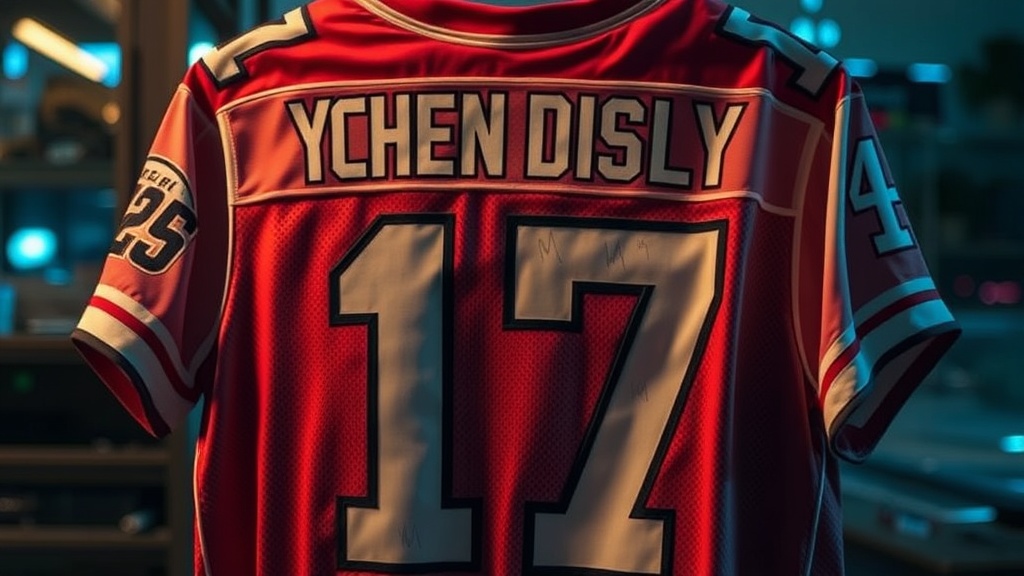
Beyond Display: Maintaining Your Signed Jersey's Pristine Condition

Did you know that water, often seen as the universal cleaner, can be an irreversible enemy to certain textile dyes and fibers, especially in older or delicate garments? While your cherished signed jersey might not be an ancient artifact, the same principle of careful preservation applies—particularly when its value is intrinsically tied to a specific, often fragile, autograph. This guide unpacks the critical considerations and safest approaches for cleaning your signed jerseys, helping you protect both the fabric and the invaluable signature it bears. We'll explore when and how to approach cleaning, focusing on methods that prioritize the long-term integrity of your collectible.
Should You Ever Really Clean a Signed Jersey?
It’s a question that haunts many collectors: to clean, or not to clean? The immediate answer for many is a resounding, “No!” And in a significant number of cases, that's sound advice. The primary risk lies in compromising the autograph itself. Inks can be water-soluble, fade with harsh chemicals, or even lift with abrasive contact. The value of a signed jersey often diminishes drastically—or even vanishes—if the signature is smudged, faded, or removed.
However, ‘never’ isn’t always practical. Surface dust accumulates, and accidental, non-ink related marks can appear. The decision to clean must be weighed against the potential for irreversible damage. If a jersey is extremely rare, has a particularly delicate signature, or is a centerpiece of your collection, avoiding any cleaning beyond simple, non-contact dusting is almost always the prudent course. For some, the patina of age and use is part of the story, especially for game-worn pieces. Understand that any cleaning effort introduces a degree of risk. For a deeper dive into textile care, especially for historical items, the American Institute for Conservation offers valuable insights into preservation practices that inform how we handle modern collectibles (though always adapt their general advice to your specific item's needs and risks). Check out