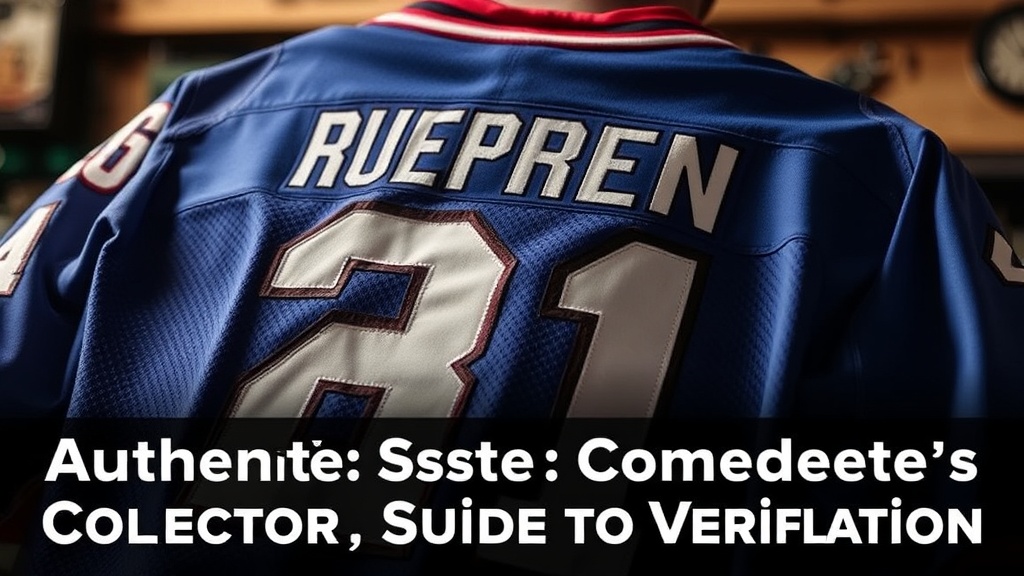
Authentic Signed Jerseys: A Complete Collector's Guide to Verification

This guide covers everything you need to know about verifying authentic signed jerseys—from spotting the real deal to avoiding the fakes that flood the market. Whether you're dropping $200 on a rising star or $2,000 on a vintage legend, knowing what separates genuine autographs from forgeries protects your wallet and your collection's integrity. You'll learn about the major authentication companies, the red flags that scream "fake," and the smart buying strategies that experienced collectors use every day.
What Is Jersey Authentication and Why Does It Matter?
Authentication is the process of verifying that a signature on a jersey is genuine. Third-party companies examine the autograph using trained experts, comparison samples, and sometimes forensic tools to determine legitimacy. Without it, you're basically trusting a stranger's word—and in the memorabilia market, that's a gamble you don't want to take.
The sports memorabilia industry loses an estimated $500 million annually to forgeries according to FBI estimates. Fake jerseys often look perfect. The fabric's right. The stitching's clean. But that Sharpie scrawl? It might be the work of a forger working out of a garage in Florida. Authentication separates the treasures from the trash.
Here's the thing: not all authentication carries equal weight. Some companies have rigorous standards. Others will slap a hologram on practically anything for a fee. Knowing which authentication services to trust—and which to avoid—makes or breaks your collection's value.
Which Authentication Companies Can You Actually Trust?
The big three in sports authentication are PSA/DNA, Beckett Authentication Services (BAS), and James Spence Authentication (JSA). These companies have built reputations over decades. Their holograms and certificates of authenticity (COAs) carry weight with buyers, dealers, and auction houses.
| Company | Strengths | Typical Turnaround | Price Range |
|---|---|---|---|
| PSA/DNA | Largest database, strong resale value, trusted by major auction houses | 20-30 business days | $20-$100+ per item |
| Beckett (BAS) | Modern autograph expertise, detailed letter authentication, excellent for recent players | 15-25 business days | $25-$125+ per item |
| JSA | Strong historical autograph knowledge, experienced team, good for vintage pieces | 20-35 business days | $25-$100+ per item |
Worth noting: a COA is only as good as the company behind it. Anyone can print a certificate. The hologram sticker and the company's reputation do the heavy lifting. PSA/DNA's verification database lets you look up any item by certification number—a feature that adds serious confidence when buying secondary market.
That said, even the best companies make mistakes. Authentication is part science, part art. Experts disagree sometimes. A "no opinion" or "unable to authenticate" result doesn't necessarily mean fake—it means the autograph didn't match known exemplars closely enough to certify with confidence.
What Are the Warning Signs of a Fake Signed Jersey?
Several red flags should send you running. Suspiciously low prices top the list. An autographed Tom Brady Patriots jersey authenticated by PSA won't sell for $150. That's not a deal—that's a trap. Trust your gut when something feels too good.
Look for these warning signs:
- Stock photos only: Sellers using manufacturer images instead of actual jersey photos might not even have the item.
- Vague authentication: "Comes with COA" means nothing without naming the company. A certificate from "Elite Sports Memorabilia Authentication" printed on home computer paper isn't worth the ink.
- Perfect placement: Machine-signed jerseys often have signatures in identical positions with identical pressure. Hand-signed items vary slightly.
- Rushed signatures: Authentic autographs from in-person signings sometimes show variation—pressure changes, ink flow differences. Forgeries often look too consistent or oddly shaky.
- Seller history: Check feedback. One seller moving 50 "autographed" Michael Jordan jerseys monthly? That's not normal. Jordan signings are rare and expensive.
The catch? Some fakes are incredibly convincing. Modern forgery operations use sophisticated techniques. They study authentic examples. They practice for months. That's why professional authentication matters—experts spot nuances the average collector misses.
Examine the ink carefully. Authentic Sharpie signatures on fabric typically show some bleeding into the material. The ink settles into jersey mesh. Forgeries sometimes sit on top of the fabric or look unnaturally perfect. Under magnification (even a phone camera zoomed in), differences emerge.
How Do In-Person Signings Compare to Pre-Authenticated Jerseys?
In-person (IP) autographs—obtained by you at games, hotels, or scheduled signings—offer the best authenticity guarantee. You watched the player sign. No questions. No doubts. That personal connection makes IP collecting deeply satisfying for many enthusiasts.
But IP collecting has challenges. Access isn't equal. Season ticket holders catch players arriving at stadiums. Dedicated collectors stake out team hotels. It takes time, patience, and sometimes thick skin (not every athlete signs willingly). You'll need quality supplies—fine-point Sharpies (the industry standard), jersey cases for protection, and knowledge of each player's signing habits.
Pre-authenticated jerseys from reputable dealers offer convenience. You pay more upfront. The authentication company's verification backs your purchase. For collectors without time for IP hunting—or those seeking vintage players who no longer sign—this route makes sense.
Hybrid approaches work too. Some collectors buy unsigned authentic jerseys (Nike Elite, Mitchell & Ness authentic) and pursue players at signing events. Tristar Productions, Steiner Sports, and Fanatics host organized autograph sessions with guaranteed signatures. These "private signings" authenticate through the hosting company, often with on-site witnesses.
What's the Best Way to Store and Display Signed Jerseys?
Proper storage protects your investment. Jerseys fade. Ink degrades. Light exposure—especially UV light—destroys signatures over time. A signed jersey stuffed in a closet beats hanging in direct sunlight, but neither option is ideal.
UV-protective display cases represent the gold standard. Companies like Sports Displays and BallQube manufacture cases specifically for memorabilia. Look for cases with 98%+ UV protection. Shadow box frames work well for wall display. Avoid regular glass—it offers minimal UV protection.
Storage environment matters too. Attics get hot. Basements get damp. Stable temperature and humidity prevent fabric deterioration and ink fading. Aim for 65-70°F with moderate humidity. Acid-free tissue paper inside folded jerseys prevents crease marks from becoming permanent.
Never dry-clean signed jerseys. The chemicals attack ink. Spot clean carefully if necessary, working around signatures. For valuable vintage pieces, professional conservation services exist—though they're rarely needed for modern collectibles.
Where Should You Buy Authentic Signed Jerseys?
Provenance (the documented history of ownership) adds tremendous value. Jerseys with photo proof of the signing—images of the player actually signing that specific item—command premiums. Video evidence? Even better. This documentation creates an unbroken chain of authenticity that complements professional authentication.
Recommended purchasing channels:
- Direct from team stores with authentication partnerships: Many MLB and NBA team shops now sell authenticated memorabilia with hologram verification.
- Established dealers with return policies: Companies like Steiner Sports, Fanatics Authentic, and Mounted Memories offer authenticity guarantees plus return windows.
- Auction houses: Heritage Auctions, Goldin, and SCP Auctions specialize in high-end memorabilia with rigorous vetting processes.
- Reputable collectors at shows: National Sports Collectors Convention (NSCC) events bring dealers together where you can examine items personally before buying.
- Online marketplaces with buyer protection: eBay's Authenticity Guarantee program now covers signed jerseys over $500, with items verified by professional authenticators before reaching you.
Private sellers on Facebook groups and forums offer deals, but the risk increases significantly. Require authentication from PSA, Beckett, or JSA. Verify the certification number directly with the authentication company's website—not through a link the seller provides (those can be faked).
How Much Should You Expect to Pay for Authentic Signed Jerseys?
Pricing varies wildly based on player, jersey type, authentication, and condition. Understanding market ranges prevents overpayment and helps identify suspicious bargains.
Entry-level signed jerseys from solid NBA role players or NFL starters typically run $150-$400. Think players like Malcolm Brogdon or Chris Godwin—good players, not household names. Mid-tier stars (All-Star level, not superstars) command $400-$1,200. Superstar signatures—LeBron James, Patrick Mahomes, Mike Trout—start around $800 and climb rapidly based on jersey quality and authentication.
Vintage legends carry premiums based on scarcity. A authenticated Michael Jordan Bulls jersey runs $3,000-$10,000+ depending on era and condition. Mickey Mantle signed Yankees jerseys—extremely rare since he passed in 1995—regularly exceed $5,000.
The jersey itself matters. A signed Nike game-worn authentic carries more value than a signed fan replica. Mitchell & Ness vintage reproductions fall somewhere between. Unsigned authentic jerseys cost $150-$300 retail; the signature adds the premium based on player popularity.
Authentication costs factor in too. If you're getting an IP auto authenticated, budget $25-$50 per item plus shipping. For high-value pieces, upgrade to full LOA (Letter of Authenticity) documentation rather than just sticker certification.
Building a collection of authentic signed jerseys rewards patience and knowledge. Start with players you genuinely appreciate. Learn their signing habits and typical price points. Verify everything through trusted authentication services. The thrill of owning a genuine piece of sports history—knowing that jersey passed through that player's hands, bore their signature—never really fades.